


Turning Momentum into Meaningful Action for Women's Health
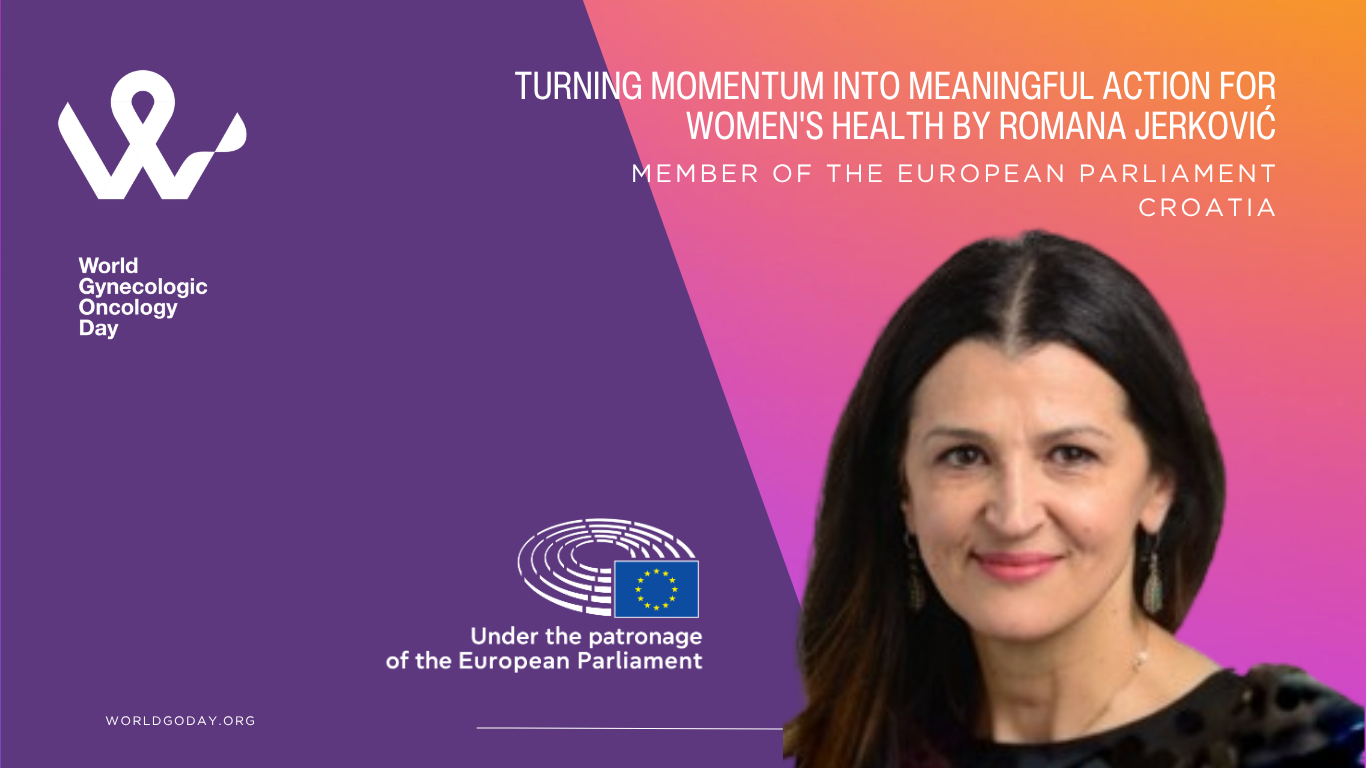
By MEP Romana Jerković
Too many women facing gynaecological cancers experience delays in diagnosis, limiting treatment options and worsening outcomes. Their concerns may be overlooked, their symptoms underestimated, and opportunities for early detection missed. These challenges reflect a broader reality: despite affecting millions of women across Europe, gynaecological health remains burdened by persistent stigma and insufficient attention. For women affected by ovarian, uterine, cervical, vaginal, or vulvar cancers, the consequences can be profound.
On the 8th edition of the World Gynecologic Oncology Day, marked every 20 September, we are reminded that this stigma is not just a social discomfort, it is a clinical problem with measurable consequences. We are also reminded that this situation can be changed: by talking openly about risk factors and symptoms, by making prevention accessible to everyone regardless of where they live, and by listening to patients rather than leaving them to carry the silence alone. This year's theme, Support Not Stigma, asks us to go further than awareness alone and build the systems of support that the more than one million women diagnosed each year will depend on.
I am proud to support World Gynecologic Oncology Day 2026 from the European Parliament. The campaign reflects something I strongly believe in: that women affected by gynaecological cancers deserve greater visibility, stronger support, and a more prominent place on the health policy agenda. But awareness alone is not enough. Europe must do more to ensure that every woman has access to prevention, timely diagnosis, and high-quality care, regardless of where she lives.
Turning solidarity into action means translating these shared commitments into policies that improve outcomes for women across Europe. As we look to strengthen women's health across the EU, the proposal put forward by the European Society of Gynaecological Oncology (ESGO) and the European Network of Gynaecological Cancer Advocacy Groups (ENGAGe) for an EU-wide ecosystem of Centres of Excellence for Women's Health offers a promising way forward. By bringing together multidisciplinary expertise, common quality standards and stronger referral pathways, these centres could help reduce gender health inequalities and ensure that more women have access to high-quality care, regardless of where they live.
That is where the European institutions must come in. The European Parliament is playing an important role in keeping women's health on the European policy agenda, particularly in addressing the persistent gender health gap.
As Co-Chair of the MEPs for Women's Health Interest Group, we are working on ensuring that conditions, too often overlooked, including gynaecological cancers, receive the policy attention, research investment and healthcare support they deserve. As I have previously stated, “advancing women’s health is not just a matter of social justice, but also essential to building a more equitable society” .
This ambition goes hand in hand with Europe’s Beating Cancer Plan, launched as a political commitment to turn the tide against cancer and designed to tackle the entire disease pathway, from prevention and early detection to diagnosis, treatment and long-term patient support. The Plan reflects the scale of a challenge that, in 2024 alone, affected an estimated 2.7 million people diagnosed with cancer across the EU. Recognising that around 40% of cancer cases are preventable, it underscores the importance of investing in prevention, vaccination, symptom awareness, timely diagnosis and access to specialised care.
As discussions on the next Multiannual Financial Framework, which will set the European Union’s budgetary priorities for 2028–2034, move forward, we have an opportunity to build on this progress and ensure that women’s health remains firmly embedded in future EU priorities.
I will continue to push for gynaecological cancers to receive the attention they deserve in EU health policy and funding. Because replacing stigma with support requires more than awareness. It requires a sustained commitment to improving the lives of women across Europe, and to building a future in which fewer women have to face these challenges in the first place.
Footnotes & References
1 European Society of Gynaecological Oncology & ENGAGe. (2026, May). Support not stigma: Join the 8th #WorldGODay on September 20 [Press release]. World GO Day. https://www.worldgoday.org/media/2026/05/World-GO-Day_Press_Release_2026.pdf(opens in new tab)
2 European Institute of Women's Health. (2025, January 29). MEPs for Women's Health [Press release]. https://eurohealth.ie/meps-for-womens-health/(opens in new tab)
3 European Commission. (2026, April 24). A cancer plan for Europe. https://commission.europa.eu/topics/public-health/european-health-union/cancer-plan-europe_en(opens in new tab)
4 European Commission. (2021). Europe's beating cancer plan: Communication from the Commission to the European Parliament and the Council. Publications Office of the European Union. https://health.ec.europa.eu/system/files/2022-02/eu_cancer-plan_en_0.pdf(opens in new tab)